If you search "AI chatbot pricing" online, you'll find two types of results. The ones that say "it depends" without giving you a single number. And the ones that throw out a range like "$0 to $500,000" that helps absolutely no one make a decision.
This article is different. We're going to show you real prices from real platforms, explain the pricing models that exist (and the hidden traps in each), and give you a concrete method to calculate whether a chatbot is actually worth it for your business. With numbers.
Because the real question isn't how much a chatbot costs. It's how much it costs you NOT to have one.
The Three AI Chatbot Pricing Models in 2026
Before comparing platforms, you need to understand how they charge. A chatbot that looks cheap can end up costing three times more if you don't read the fine print.
Model 1: Flat rate (fixed monthly price)
You pay a fixed amount per month with a usage limit. This is the most predictable model and the one that works best for small businesses that need to control spending.
Advantage: You know exactly what you'll pay each month.
Risk: If you exceed the limit, you either pay extra or your chatbot stops working.
Model 2: Pay per resolution or per conversation
You pay each time the chatbot fully resolves a query without human intervention. A "resolution" is the entire conversation, not each individual message — a single resolution can involve 10-20 messages exchanged.
It sounds fair ("you only pay when it works"), but the bill can skyrocket if your chatbot is good and resolves a lot.
Advantage: If the chatbot doesn't resolve, you don't pay.
Risk: Your bill grows unpredictably.
Model 3: Pay per agent or per seat
You pay for each person on your team who needs access to the dashboard. The chatbot may be an add-on or included, but the price scales with your team size.
Advantage: Predictable if your team is small.
Risk: Scales fast. A team of 5 people can mean hundreds of dollars in licenses alone, before you even count the AI chatbot.
AI Chatbot Pricing Comparison: Real Prices in 2026
Prices verified directly on each platform's official pricing page in February 2026. If you're reading this later, double-check that they're still current. The average chatbot pricing in 2026 sits between $20 and $60/month for small businesses, although enterprise tiers can easily exceed $2,000/month depending on volume.
| Platform | Base price | AI chatbot | Billing unit |
|---|---|---|---|
| Bravos AI | Starter: $23/mo (€19) · Pro: $59/mo (€49) (7-day free PRO trial) | Included in all plans (RAG) | Unlimited |
| Tidio | Starter: $29/mo | From $39/mo extra (50 conversations) | Conversations |
| Intercom | From $29/seat/mo (annual) | $0.99 per AI-resolved query | Resolutions |
| Crisp | Essentials: $114/mo (€95; AI not in the $54/€45 Mini plan) | Included (~450 automated conversations, $30/€25 in AI credits) | Credits |
| Chatbase | Hobby: $19/mo | 2,000 credits/mo (1 credit ≠ 1 message) | Credits |
| Zendesk | From $19/agent/mo | From $1.50 per AI-resolved query | Resolutions |
If you want to explore more options, directories like Dang.ai list thousands of AI tools with filters by category and pricing.
How Much Does It Cost NOT to Have an AI Chatbot?
Before deciding whether a chatbot is worth it, think about what you're already paying without realizing it.
Your team answers the same questions over and over
Think about the inquiries your business receives each week. How many are variations of the same thing? Business hours, pricing, availability, how the service works, return policies. In most small businesses, 50% to 80% of inquiries are questions that already have an answer on your website — but customers can't find it or prefer to ask directly.
Each of those inquiries costs someone on your team time. Time they're not spending closing sales, handling complex cases, or growing the business.
After hours, nobody's there
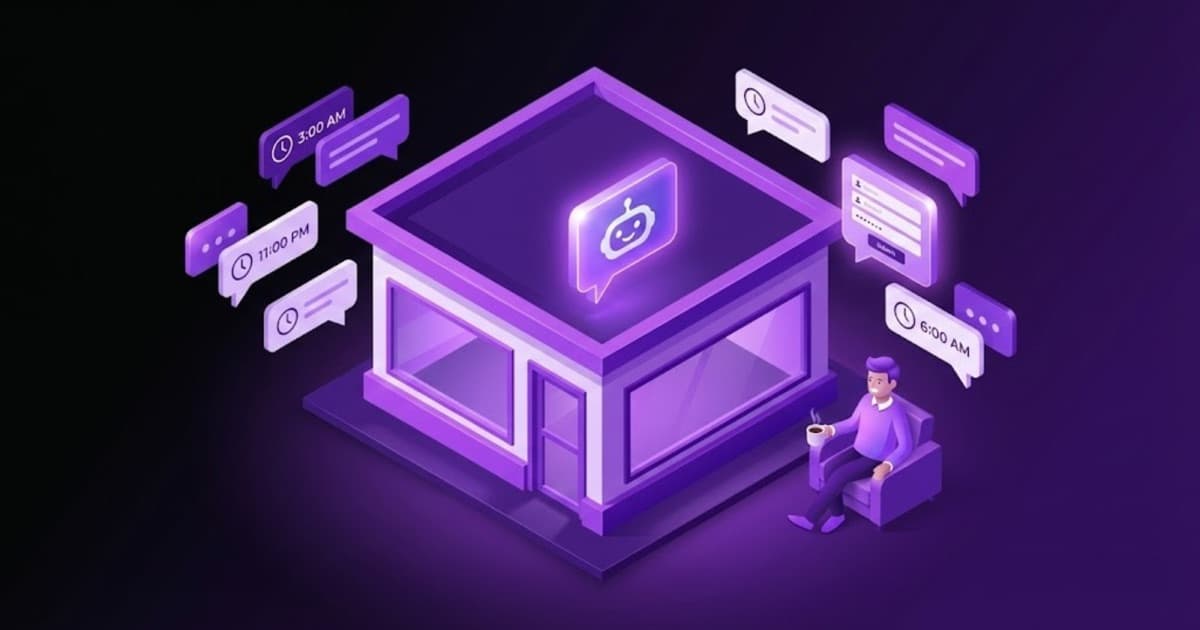
If your business operates from 9 to 6, there are 15 hours every day — plus weekends and holidays — when a potential customer can land on your website and find no one. That lead either goes to a competitor or simply goes cold.
This isn't just a hunch: a study by MIT and InsideSales.com analyzed over 15,000 leads and 100,000 contact attempts over 3 years. The finding: contacting a lead within the first 5 minutes makes you 21 times more likely to qualify them compared to waiting 30 minutes. A chatbot responds instantly, even at 3 AM.
The real cost: an example with numbers
Picture a typical small business:
- 200 inquiries per month (email, forms, phone, social media)
- 1 person partially dedicated to answering them (20 hours/week, company cost: $2,000/month)
- No after-hours support
That person spends 80 hours per month answering inquiries. If a chatbot resolves half of them — the repetitive ones, the ones with a clear answer — you free up 40 hours per month. That's $1,000 in recovered time that person can spend on tasks that actually generate revenue.
| Concept | Value |
|---|---|
| Time freed per month | 40 hours |
| Value of that time (50% of $2,000) | $1,000 |
| Chatbot cost (Bravos AI Starter) | $23/month |
| Net monthly savings | $977 |
What if we're twice as conservative? At 25% automation, you free up 20 hours: $500 in savings versus $23 in cost. Still profitable from month one.
And this doesn't even account for the leads you capture after hours — which today are simply lost. The person doesn't disappear. They stop answering "what are your business hours?" twenty times a day and focus on what actually grows your business.
AI Chatbots in 2026: What the Data Says
Gartner predicted in 2022 that conversational AI would save $80 billion in contact center labor costs by 2026. We're in that year now.
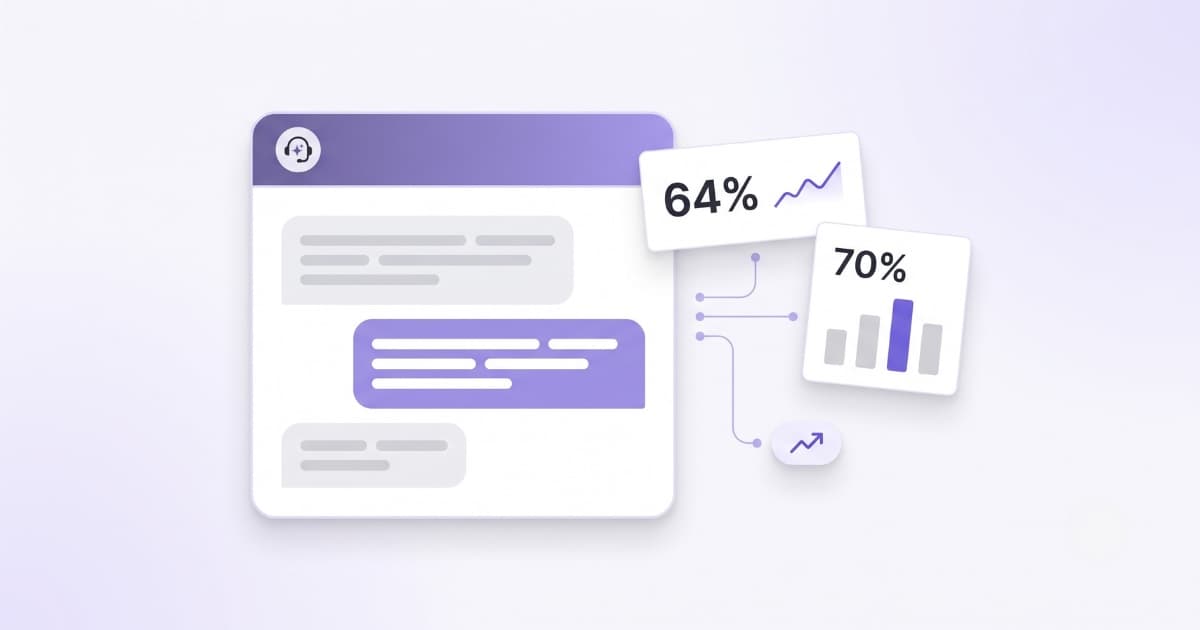
But there's an interesting tension: 64% of customers would still prefer that companies didn't use AI for customer service, according to a Gartner survey of 5,728 consumers. The main concern: that it becomes harder to reach a human.
The reason isn't that they hate AI. It's that they've had bad experiences with bad chatbots — the ones that gave generic answers or flat-out made things up. The difference in 2026 is that technologies like RAG allow the chatbot to respond exclusively with your company's information, not hallucinations.
Mistakes That Make Your AI Chatbot More Expensive
Confusing a support platform with a chatbot
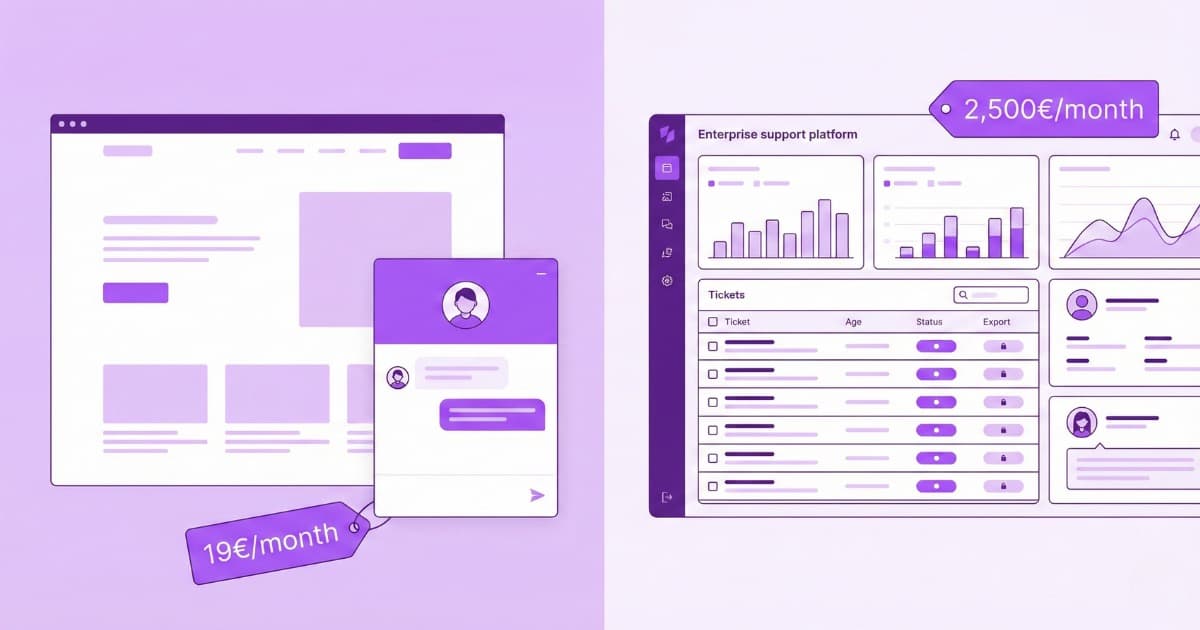
Many of the platforms in this comparison (Intercom, Zendesk, Crisp, Tidio) aren't chatbots — they're full customer support platforms that happen to include a chatbot as one feature among many. What you're really paying for is a ticketing system, CRM, agent routing, integrations with Salesforce or Shopify, and analytics dashboards for support teams.
If you have a team of 15 people managing thousands of tickets daily, that makes sense. But if you're a small business with 5-10 people, you're probably paying for infrastructure you'll never use.
Here's something rarely mentioned: these platforms assume you have human agents available for when the chatbot escalates a query. But in a small business, that escalated ticket ends up answered the next day — which is exactly the same as a contact form. If you don't have someone dedicated to handling escalations in real time, the routing and handoff system you're paying for adds no value.
Ignoring how the platform handles your data
Not all chatbots process your data the same way. Most use RAG (Retrieval-Augmented Generation): they convert your documents into text and search for fragments similar to the user's question —how that retrieval works, and whether you even need a vector database for it, is covered in vectorless RAG—. For FAQs and documentation, this works well. But if you have a product catalog with filterable attributes (price, category, size, location), RAG alone gives approximate results, not exact ones. The alternative offered by platforms like Intercom or Zendesk is for you to build your own API — a cost that doesn't appear in any pricing table. With Bravos AI, you upload a CSV with your catalog and the chatbot automatically filters by any attribute (price, location, category) without writing a single line of code. And if you sell on Shopify or WooCommerce, it connects directly to your store — you don't even need the CSV.
Not training the chatbot properly
An untrained chatbot is a chatbot that resolves nothing. And a chatbot that resolves nothing has negative ROI. Invest time in preparing your content properly: clear FAQs, well-structured product information, well-written policies.
Paying for features you don't need
Many platforms charge extra for things like removing their branding from the widget, adding channels like WhatsApp, or accessing analytics. Before signing up, make a list of what you actually need. If your business does $500,000 a year in revenue, you don't need a platform that costs $2,500/month. That's like renting a bus to go buy groceries. For the WhatsApp-specific case, our complete WhatsApp AI chatbot guide covers the whole ecosystem (app vs API, free vs paid, setup) and our comparison of the 13 best WhatsApp chatbot platforms breaks down the real prices and the hidden Meta surcharge almost nobody talks about.
Conclusion
The cost of an AI chatbot in 2026 ranges from $0 to thousands of dollars per month. For most small businesses, a SaaS solution between $19 and $60/month covers everything you need.
But price is only part of the equation. What matters is how much time you free up for your team, how many leads you capture after hours, and how many repetitive inquiries you stop handling manually. As we've seen, even with conservative estimates, a chatbot pays for itself from the very first month.
Our advice: don't overthink it. Start with the 7-day PRO trial, train it with your information, and measure it in real conditions with your own traffic. Real data from your business is worth more than any pricing table.
And one advantage you won't see in any pricing table: managing and improving the bot doesn't force you to pay for a separate tool. If you already work with Claude or ChatGPT, with our MCP connector you do it from that same assistant you already pay for —audit conversations, fix the content, adjust the tone—, without adding another subscription to administer it.
With Bravos AI you can create your chatbot with 7 days free on the full PRO plan, train it with your company's data using RAG technology, and install it on your website in minutes. No commitment. And if you need more — choose from premium AI models like GPT-4o, Claude, or Gemini, fully customize how your chatbot behaves, or get dedicated support with guaranteed response time — our Enterprise plan adapts to whatever you need.
Frequently asked questions
What are the AI chatbot pricing models in 2026?
There are three main pricing models. Flat rate: a fixed monthly price with a usage limit, the most predictable for small businesses. Pay per resolution or per conversation: you pay each time the chatbot fully resolves a query without human intervention; sounds fair but the bill can skyrocket if your chatbot is good. Pay per agent or per seat: you pay for each person on your team with dashboard access; predictable for small teams but scales fast with headcount. Important caveat: some platforms measure by message, others by conversation or resolution, so unit definitions matter when comparing prices.
How much does an AI chatbot cost in 2026?
Verified February 2026 prices across major platforms: Bravos AI Starter is $23/month and Pro $59/month with unlimited messages and AI included in all plans (7-day free trial of the full PRO plan). Tidio Starter is $29/month with AI chatbot from $39/month extra. Intercom is from $29/seat/month plus $0.99 per AI-resolved query. Crisp Essentials is $114/month ($95 EUR) with ~450 automated conversations included. Chatbase Hobby is $19/month for 2,000 credits. Zendesk is from $19/agent/month plus $1.50-$2 per AI resolution. The total depends heavily on the pricing model and your volume.
Is an AI chatbot worth it for a small business?
Yes, the math works out from month one in most realistic scenarios. Example: a small business with 200 inquiries/month and one person partially dedicated to answering them (80 hours/month, $2,000 cost). If a chatbot resolves half of those repetitive queries, you free up 40 hours/month, worth $1,000 in recovered time. Versus a Bravos AI Starter plan at $23/month, that is $977 net monthly savings. Even at 25% automation (conservative), you free up 20 hours for $500 in value versus $23 in cost. Still profitable.
What mistakes make an AI chatbot more expensive than it should be?
Four common mistakes. Confusing a support platform with a chatbot: Intercom, Zendesk, Crisp and Tidio are full customer support platforms (ticketing, CRM, agent routing) where the chatbot is one feature among many, which is overkill for a 5-10 person team. Ignoring how the platform handles structured data: RAG alone gives approximate results on product catalogs; if you sell products you need exact filtering, not similarity search. Not training the chatbot properly: an untrained chatbot resolves nothing, which means negative ROI. Paying for features you do not need: removing branding, adding WhatsApp, analytics dashboards. If you bill $500K/year, a $2,500/month platform is overkill.
Sources
- Intercom Pricing — Essential: $29/seat/mo (annual), AI: $0.99/resolution. Verified February 2026
- Tidio Pricing — Starter: $29/mo, AI chatbot: from $39/mo (50 conversations). Verified February 2026
- Crisp Pricing — Mini: €45/mo (no AI), Essentials: €95/mo (~450 automated conversations, €25 AI credits included). Verified February 2026
- Chatbase Pricing — Hobby: $19/mo (2,000 credits). Verified February 2026
- Zendesk Pricing — From $19/agent/mo, AI resolutions: $1.50 (committed) or $2.00 (pay-as-you-go). Verified February 2026
- MIT/InsideSales.com — Lead Response Management Study — 15,000+ leads. Responding within 5 min = 21x more likely to qualify
- Gartner — Conversational AI Will Reduce Contact Center Labor Costs by $80B in 2026 — August 2022
- Gartner — 64% of Customers Prefer Companies Don't Use AI for Customer Service — July 2024, 5,728 consumers
Want to calculate your ROI?
Try the PRO plan free for 7 days and measure how much time it saves your team in real conditions.
Try PRO free for 7 days