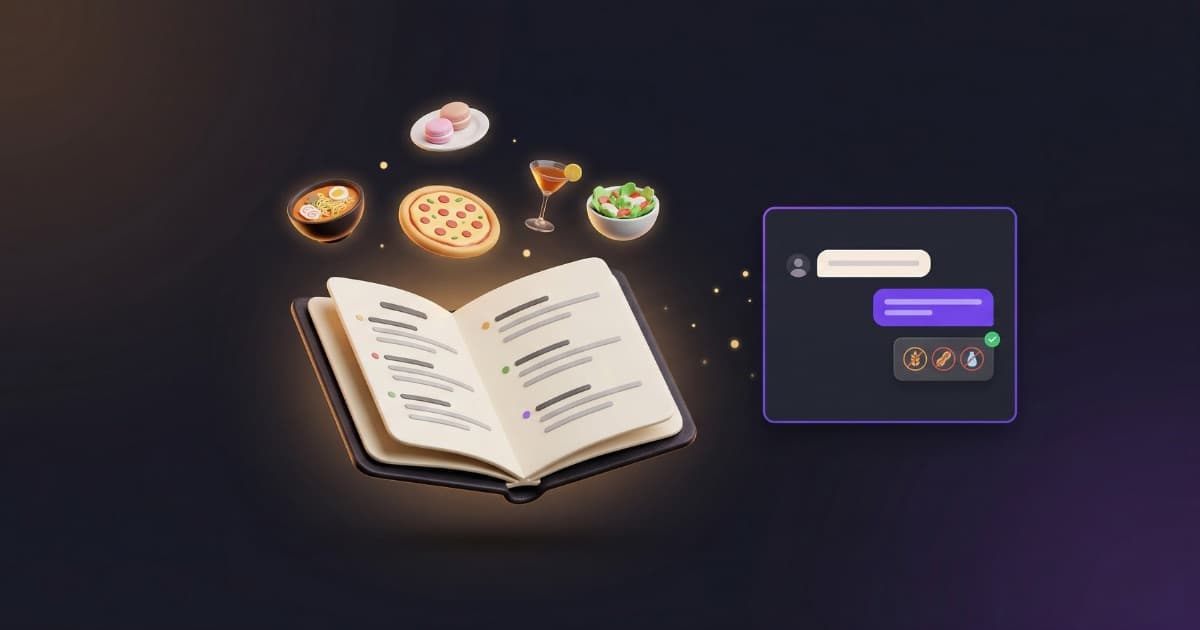
At Bravos AI we’ve built an AI chatbot that reads your restaurant’s menu, allergen sheet, and reservation policy — and answers your customers based on that information. When someone asks “does the pad thai contain peanuts?” at 11 PM, the chatbot responds with what your allergen sheet says, not with what it makes up.
Most restaurant chatbots don’t do this. They’re either button-based bots (“press 1 to book, 2 to see the menu”) or generic AI that doesn’t know what dishes you serve. We use a technique called RAG that searches your documents before answering — we explain how it works in this article about why chatbots hallucinate.
This article covers what our restaurant chatbot does, what it can’t do (honestly), how the pricing compares to Tidio and Intercom, and how to set it up in 30 minutes.
The problem: most restaurants have zero after-hours support
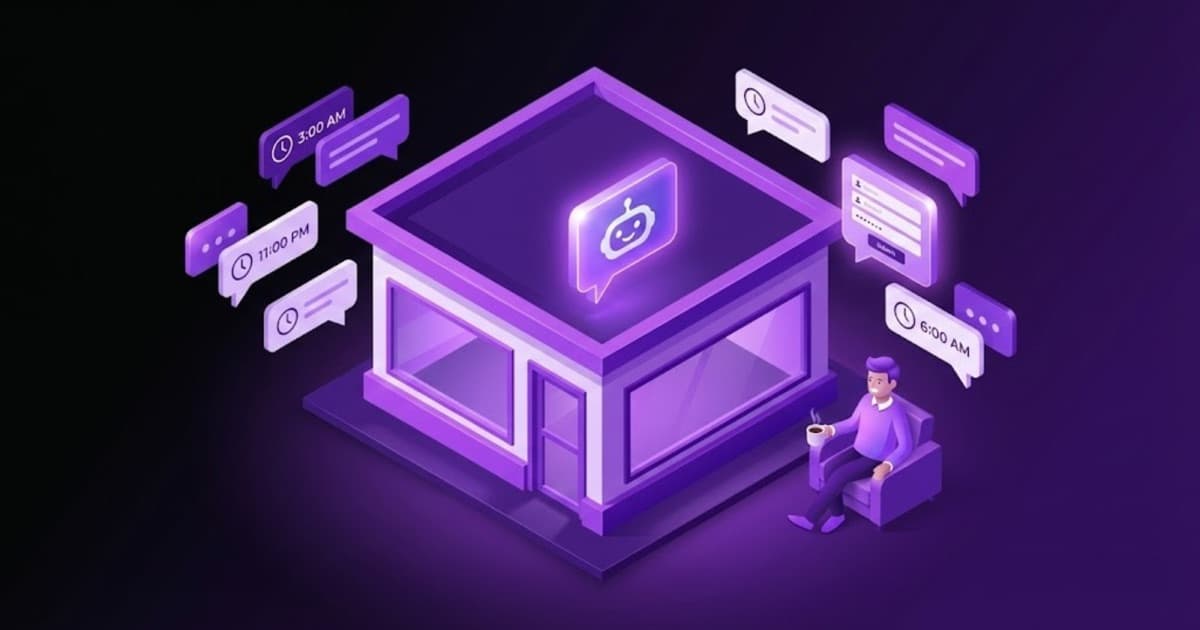
Customer inquiries at restaurants cluster at the worst possible times: the two hours before service and after closing. According to Yelp for Business, a restaurant that misses 20–30 calls per week could be losing $15,600 to $23,400 per year in unrealized bookings and revenue.
And there’s a data point from the MIT/Harvard Business Review that keeps holding up: responding within 5 minutes makes you 21x more likely to convert an inquiry into a customer. After 30 minutes, the probability drops by 90%.
What the Bravos AI restaurant chatbot does
Answers questions about your menu and allergens
Upload your menu as a PDF or paste it as text, add your allergen information, and the chatbot can answer “do you have gluten-free options?” or “how much is the tasting menu?”. It doesn’t make things up: it searches your information and responds with what it finds. If it doesn’t have the answer, it says so.
This is especially relevant for allergens. EU Regulation 1169/2011 requires all food establishments in the EU to disclose the 14 major allergens. A chatbot trained on your allergen data can fulfill this obligation 24 hours a day, even when no one is around to answer. In the US and UK, similar regulations apply (FDA Food Code, Natasha’s Law).
Responds in 15 languages automatically
If your restaurant is in a tourist area, a significant portion of your customers don’t speak the local language. According to CSA Research, 76% of consumers prefer to buy in their own language.
With Bravos AI, the visitor writes in German, French, English or Japanese, and the chatbot responds in their language. With a single set of content, no manual translation needed. We explain how this works in our multilingual chatbot guide.
Updates when you change the menu
New menu every week? Seasonal dishes? Update the document in the Bravos panel and the chatbot adapts. No coding, no waiting, no one to call.
Captures potential customer contacts
When someone asks about a private event for 30 guests, you probably want their email. The chatbot can ask for it during the conversation, at the right moment, and saves it with the context of what they asked about. No cold forms. More on this in how to capture leads with a chatbot without being pushy.
Three types of restaurant chatbot (and why the difference matters)
Not all chatbots do the same thing, even if they use the same words to sell themselves:
| Button bot | Generic AI | AI trained on your data | |
|---|---|---|---|
| Understands natural language | No | Yes | Yes |
| Knows your menu | No | No | Yes |
| Answers allergen questions | No | Hallucinated | Accurate |
| Multilingual | No | Partial | 15 languages |
The third column is what Bravos AI does. The technique is called RAG (Retrieval-Augmented Generation): instead of generating answers from scratch, it searches your information and responds with what it finds. We explain the details in this article about why chatbots fail with structured data.
What else you can do with a restaurant chatbot on Bravos AI
Customize the look and tone. Choose between friendly, professional, or custom tone. Change the widget colors to match your brand, add your restaurant’s logo as the avatar, and configure the welcome message. All from the dashboard —or from the Claude or ChatGPT chat itself with our MCP connector—, no code.
Upload content in multiple formats. PDF of the menu, text with your reservation terms, URLs from your website with information about the chef or the restaurant’s history. The chatbot extracts text from everything you upload and uses it to answer.
Works on any website. WordPress, Squarespace, Wix, Webflow, custom-built — doesn’t matter. One line of JavaScript you paste wherever you want. You can also restrict which domains it runs on so nobody copies your widget.
Usage analytics. See how many conversations the chatbot handles, what customers are asking, and how many contacts it captures. Useful for spotting questions people ask that you haven’t covered yet.
A Deloitte study (Q4 2024) surveyed 375 restaurant executives across 11 countries and found that 82% plan to increase their AI investment, while 63% already use AI daily for customer experience. But 48% still don’t know which use case to prioritize. Answering repetitive questions 24/7 is probably the simplest one with the highest return.
How much does a restaurant chatbot cost in 2026
Real prices, verified April 2026:
| Platform | Base price | AI included | Notes |
|---|---|---|---|
| Tidio | Free (50 conv.); Starter $29/mo | Lyro AI: from $39/mo extra | Real cost with AI: $68+/mo |
| Intercom (Fin) | $29/mo | $0.99 per resolution | 100 queries/mo = $99 extra |
| Bookline | Not published | Voice AI (phone) | Specialized in phone calls. 1,500 restaurants in Spain |
| Bravos AI | 7-day free PRO trial; Starter €19/mo | AI included in all plans | Pro: €49/mo (3 bots, lead capture). No per-resolution fees |
For a more detailed pricing comparison, see How much does an AI chatbot cost for your business in 2026.
What a restaurant chatbot can NOT do
It doesn’t manage reservations directly. It doesn’t connect to OpenTable, Resy, or your reservation book. It can answer questions about your booking policy and provide the link or phone number to reserve, but it doesn’t block tables.
It doesn’t take complex orders. “Two pizzas, one without cheese and the other with extra ham, for pickup at 8” requires POS integration. It doesn’t do that.
It doesn’t handle emotional complaints. For that you need a person.
What it does: answer the questions your staff gets asked every single day — menu, allergens, hours, location, private events — 24/7, in 15 languages, with information you control. For most restaurants, that’s already a significant step up.
How to set up a restaurant chatbot with Bravos AI
- Create your account at bravos-ai.com and start the 7-day PRO trial
- Upload your menu as PDF, text, Excel, or CSV
- Add your allergen info, opening hours, reservation policy, and anything else you want the bot to know
- Paste one line of code on your website — works on WordPress, Squarespace, or any platform. Step-by-step guide in how to add a chatbot to WordPress in 5 minutes
- Done — the chatbot answers about your menu, allergens, hours, and everything you’ve taught it. In 15 languages. 24/7
Frequently asked questions about restaurant chatbots
Can a restaurant chatbot answer allergen questions?
Yes, if the chatbot is trained on your allergen data. Bravos AI reads your documentation and answers accurately. It doesn’t make things up: if the information isn’t in your data, it says so.
Can a restaurant chatbot handle reservations?
Not directly: it doesn’t connect to OpenTable, Resy, or similar systems. But it does answer questions about your reservation policy and provides the booking link or phone number.
How much does a restaurant chatbot cost?
Bravos AI offers a 7-day free trial of the full PRO plan. Starter: €19/month (1 bot, unlimited messages). Pro: €49/month (3 bots, unlimited messages, lead capture). AI is included in all plans, no per-resolution fees.
Does a restaurant chatbot work in multiple languages for tourist areas?
Yes. Bravos AI detects the visitor’s language and replies in it. It works in 15 languages from a single set of content, with no manual translation.
How long does it take to set up a restaurant chatbot?
About 30 minutes. Upload your menu, allergen info, hours, and policies. Paste one line of code on your website. Done.
Sources
- Deloitte — How AI is Revolutionizing Restaurants (Q4 2024) — 375 executives surveyed across 11 countries. 82% plan to increase AI investment
- Harvard Business Review — The Short Life of Online Sales Leads — Responding within 5 minutes makes you 21x more likely to qualify a lead
- EU Regulation 1169/2011 — Food Information — Legal obligation to disclose allergens in the EU
- CSA Research — Can’t Read, Won’t Buy (2024) — 76% of consumers prefer to buy in their own language
- Yelp for Business — Cost of Missed Calls — Estimated revenue loss from missed calls: $15,600–$23,400/year
- Tidio Pricing (April 2026) — Starter: $29/mo. Lyro AI: from $39/mo extra
Want to see how it works with your menu?
Connect your chatbot to your restaurant’s menu and see how it answers. After that, plans start at €19/month.
Try PRO free for 7 days